The Science of Fibers, Allergens & Indoor Health
Carpets, rugs, and upholstery are among the biggest reservoirs of dust, allergens, microbes, and indoor pollutants in the home. These soft, porous materials collect microscopic debris continuously—skin flakes, pollen, soil particles, textile fibers, dust mites, pet dander, mold spores, environmental pollutants, and invisible residues from cooking oils and household chemicals. Because these materials act as both sources and sinks for particles, they have a major influence on indoor air quality and respiratory health. Yet most homeowners dramatically underestimate how often these surfaces need to be cleaned.
Scientific research shows that carpets and upholstery trap more airborne particles than hard flooring—but they also release them back into the air every time someone walks, sits, fluffs a pillow, or closes a door. Dust resuspension from carpets can raise particulate levels in a room for hours, especially in dry environments where static electricity increases particle movement. Upholstered furniture behaves similarly, gradually accumulating pollutants that become airborne when the fabric is compressed. These re-released particles contribute to asthma triggers, allergy symptoms, and poor indoor air quality.
The cleaning frequency for carpets, rugs, and upholstery depends on several variables: foot traffic, occupancy, pets, outdoor air quality, ventilation rates, humidity, and fabric type. Homes with pets generate significantly more dander and hair, which bind to carpet fibers and attract dust mites. Homes in urban or wildfire-prone areas accumulate fine particulate matter (PM2.5) more rapidly. Bedrooms accumulate skin cells and dust at the highest rate. And living rooms receive the most direct use, compressing fibers daily.
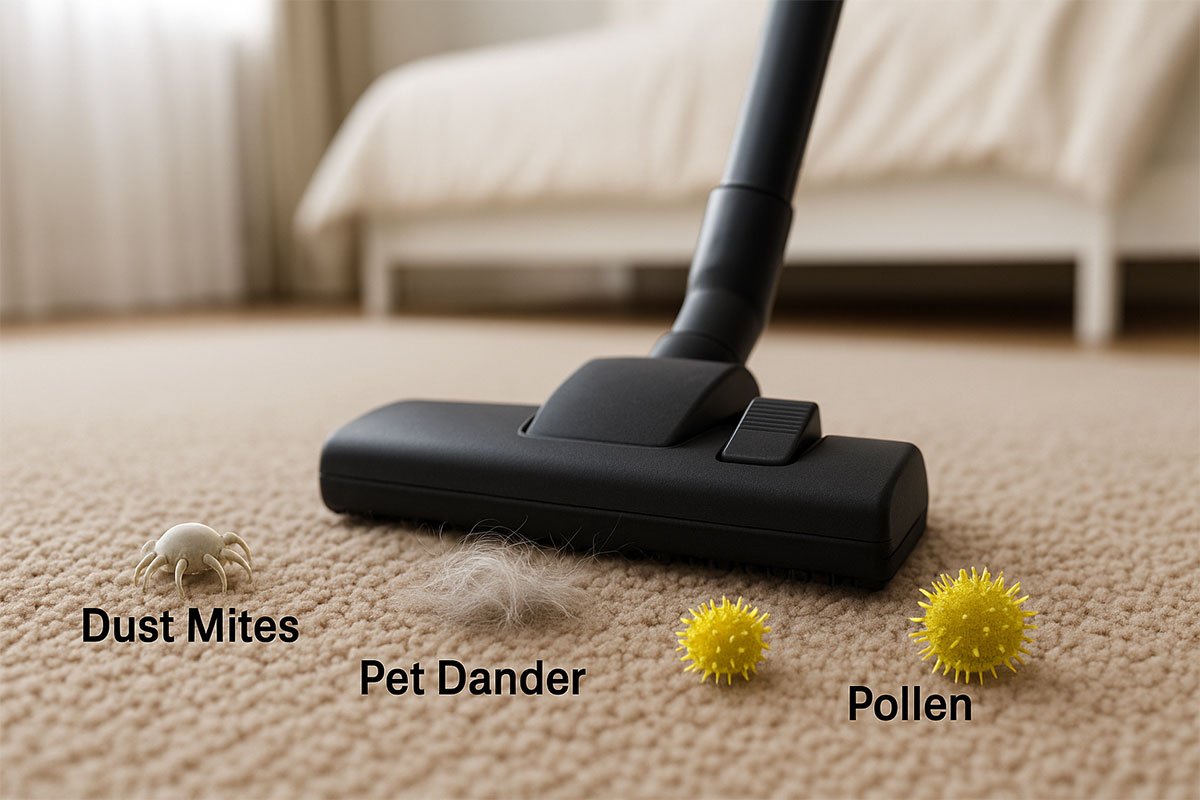
The underlying science of fabric contamination reveals why cleaning frequency matters. Dust mites thrive in carpets and upholstery because they feed on skin flakes embedded deep within fibers. Their allergenic proteins accumulate in mattresses, couches, rugs, and carpets. Mold spores settle into carpets in humid climates and can multiply when moisture is introduced. Chemical pollutants bind easily to carpet fibers, especially plastic-based synthetics, making carpets a major sink for household VOCs. All of this means that carpets and upholstery are not simply decorative—they are active biological and chemical environments.
To understand how quickly these materials accumulate contaminants, it helps to examine the most common contributors. The following list summarizes the primary factors that determine how often carpets, rugs, and upholstery should be cleaned.
Factors That Influence Cleaning Frequency
- Number of people in the home: More occupants = more skin cells, oils, and dust
- Pets: Fur, dander, saliva allergens, and outdoor contaminants
- Allergies or asthma: Requires more frequent cleaning to reduce triggers
- Foot traffic level: High-traffic zones accumulate debris rapidly
- Outdoor environment: Urban pollution, smoke, pollen, or dust storms
- Ventilation & humidity: Poor air exchange increases contaminant buildup
- Material type: Thick pile carpets trap more debris than low-pile or flatweave rugs
- Room function: Bedrooms and living rooms accumulate more biological debris
Industry guidelines often recommend vacuuming carpets weekly, but from a scientific standpoint, this is insufficient for homes with pets, high traffic, or allergy sensitivities. Many environmental health researchers recommend vacuuming twice weekly to reduce particulate load, and deep cleaning carpets every 6–12 months depending on conditions.
Upholstery is even more neglected. Couches and chairs accumulate hair, skin cells, crumbs, oils, and dust that seep into cushions and fabric folds. Most homeowners spot-clean stains but rarely conduct full deep cleaning unless a spill occurs. Yet the surface of an upholstered sofa can contain millions of dust mites and layers of allergenic debris if not maintained properly.
Area rugs behave differently based on their materials. Wool rugs resist dirt and compressive wear and have natural antimicrobial properties, but they trap fine dust deeply. Synthetic rugs attract static electricity, causing dust and hair to cling more aggressively. Jute and sisal trap particles but cannot be wet-cleaned, making dry methods essential. Regardless of material, rugs accumulate debris faster than hard floors and release particulates when disturbed.
To translate these scientific insights into practical habits, the next list provides recommended cleaning intervals for carpets, rugs, and upholstery based on research from environmental health and textile institutes.
Recommended Cleaning Frequency
- Vacuuming (with a true HEPA vacuum):
- Standard homes: 1–2 times per week
- Homes with pets: 2–4 times per week
- Allergy-sensitive homes: 3–4 times per week
- Deep carpet cleaning (hot water extraction or professional steam cleaning):
- Standard homes: every 12 months
- Pets or high traffic: every 6 months
- Allergy sufferers: every 3–6 months
- Area rugs:
- Vacuum weekly or more often
- Deep clean every 6–12 months, depending on foot traffic
- Shake-out smaller rugs outdoors monthly
- Upholstery:
- Vacuum monthly at minimum
- Homes with pets: every 1–2 weeks
- Deep clean (steam or extraction): every 6–12 months
- Curtains & fabric drapes:
- Vacuum or shake monthly
- Wash or steam clean every 6–12 months
Cleaning frequency is only part of the equation—how you clean matters just as much. Many vacuums are incapable of capturing fine dust, allergens, or microscopic skin debris because they lack proper filtration. Scientific studies show that vacuums without HEPA filters release particulate matter back into the air, worsening air quality during cleaning. HEPA vacuums, by contrast, trap particles as small as 0.3 microns, significantly reducing allergen concentrations.
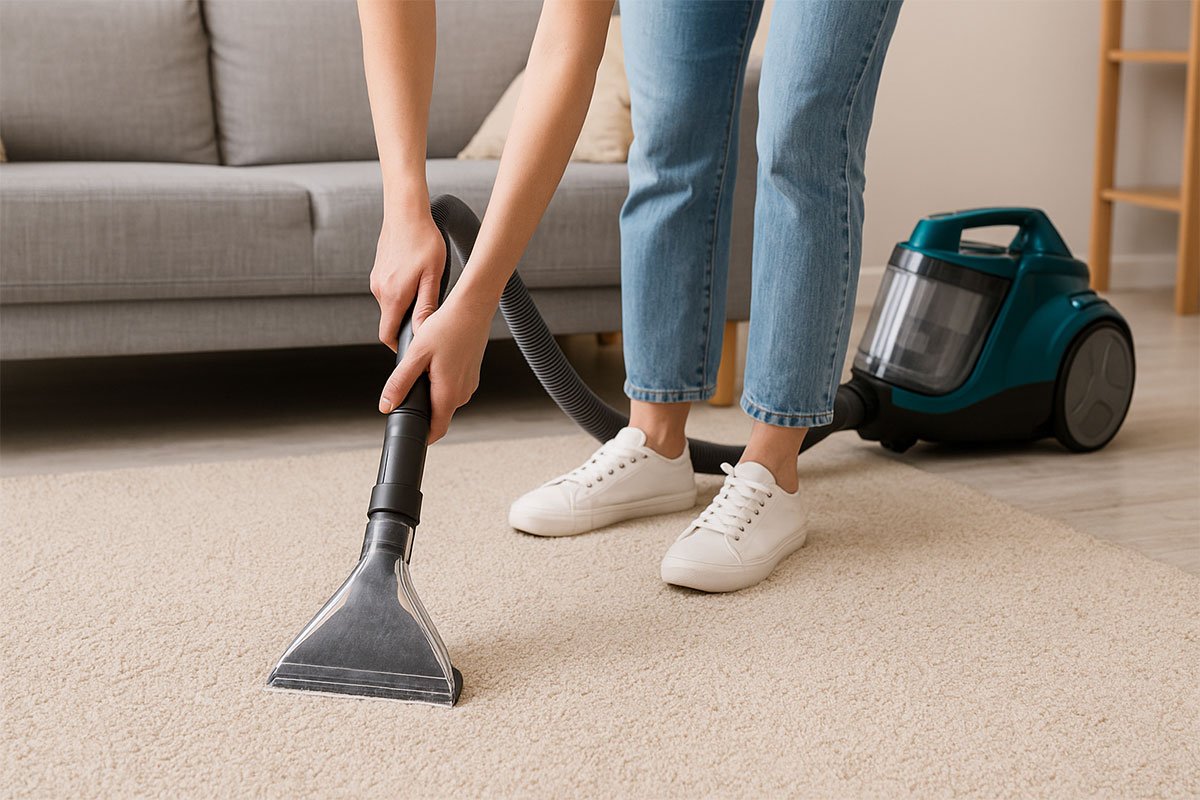
Deep cleaning carpets is equally important. Hot water extraction removes embedded dirt, dust mites, pet dander, and residues that vacuuming cannot reach. The heat used in steam cleaning also kills dust mites and reduces microbial load. For allergy sufferers, this can reduce symptoms for weeks or months. Carpet cleaning also removes oils and binding agents that accumulate over time, which trap dust and make carpets look dull.
Humidity plays a major role in dust mite and mold activity within carpets and upholstery. Dust mites thrive in humidity above 50%, and mold spores germinate easily in damp fibers. Maintaining indoor humidity between 35–50% helps reduce biological growth dramatically. Using dehumidifiers in summer or humidifiers in winter can stabilize humidity levels, reducing the need for frequent deep cleanings.
Carpets and upholstery also attract chemical pollutants. Studies from environmental health agencies show that dust contains flame retardants, phthalates, pesticides, microplastics, and VOC-bound particles. These contaminants accumulate more in carpet than on hard flooring. Regular cleaning reduces chemical exposure, especially for children, who spend more time in contact with carpets.
The second half of this article focuses on the science of preventing contamination before it accumulates. Prevention reduces cleaning effort and improves indoor air quality long-term.
Long-Term Prevention Strategies
- Use entryway mats indoors and outdoors:
Captures soil, dust, pollen, and chemicals from shoes. - Implement a no-shoes policy:
Reduces carpet pollutants by up to 60%. - Use washable throw blankets on couches:
Prevents body oils and pet hair from penetrating upholstery. - Brush pets frequently:
Significantly reduces shedding and dander levels. - Run HEPA air purifiers in high-traffic rooms:
Decreases airborne dust that would otherwise settle in fabrics. - Rotate area rugs regularly:
Reduces uneven wear and dust concentration zones. - Vacuum mattresses monthly:
Prevents dust mites from migrating into bedroom carpeting. - Avoid over-wetting during carpet cleaning:
Damp carpets create ideal mold conditions if not dried quickly. - Improve ventilation during and after cleaning:
Helps remove moisture, fumes, and airborne particulates.
Understanding carpet and upholstery maintenance is ultimately about understanding indoor air quality as a whole. Soft surfaces act as part of the home’s filtration system, trapping particles that would otherwise stay airborne. But when these surfaces are not maintained, they transform from beneficial filters into pollutant reservoirs. Regular vacuuming, humidity control, and periodic deep cleaning ensure these surfaces continue functioning as passive air quality stabilizers rather than contamination sources.
In homes with pets, carpets and upholstery require additional attention. Pet dander contains proteins that trigger allergies and stick easily to textile fibers. Vacuuming with a pet-specific HEPA vacuum, washing pet bedding weekly, and covering high-use furniture with washable covers significantly reduces allergen buildup. For pet-heavy homes, deep cleaning every 6 months is especially beneficial.
For allergy sufferers, cleanliness is not cosmetic—it’s therapeutic. Reducing dust mite allergens through regular cleaning, washing textiles in hot water, maintaining humidity control, and using HEPA filtration creates measurable improvements in respiratory comfort. Bedrooms benefit particularly, as humans shed the most skin cells while sleeping and spend 6–10 hours per night in direct contact with textiles.
Ultimately, carpets, rugs, and upholstery are integral parts of the home’s air-quality ecosystem. Proper maintenance not only keeps them visually appealing but also maintains a healthier indoor environment. With consistent cleaning habits and an understanding of the science behind fiber contamination, homeowners can significantly reduce allergens, dust, and pollutants and create a cleaner, more comfortable living space.
Scientific Sources
- Environmental Protection Agency (EPA) – “Indoor Air Quality: Dust, Allergens & Pollutants”
https://www.epa.gov/indoor-air-quality-iaq - National Institutes of Health (NIH) – Dust Mites, Carpets & Allergen Load Research
https://pubmed.ncbi.nlm.nih.gov - International Scientific Forum on Home Hygiene (IFH) – Soft Furnishings & Allergen Accumulation Study
https://www.ifh-homehygiene.org